Best Overall eSIMSaily | ||||
PriceStarting at $3.99/7 days (in the U.S.) | ||||
PlanOptions: 1GB, 3GB, 5GB, 10GB, 20GB, Unlimited | ||||
Data1GB-Unlimited | ||||
| | ||||
| |
Published: June 30, 2026
Finding the Best eSIMS and Best Phone Plans for eSIMs
The TextNow eSIM is free and you can get $0 phone service. Other options include Saily for diverse plans and features, and Airalo for international travel.
Written by Valeria Dulava
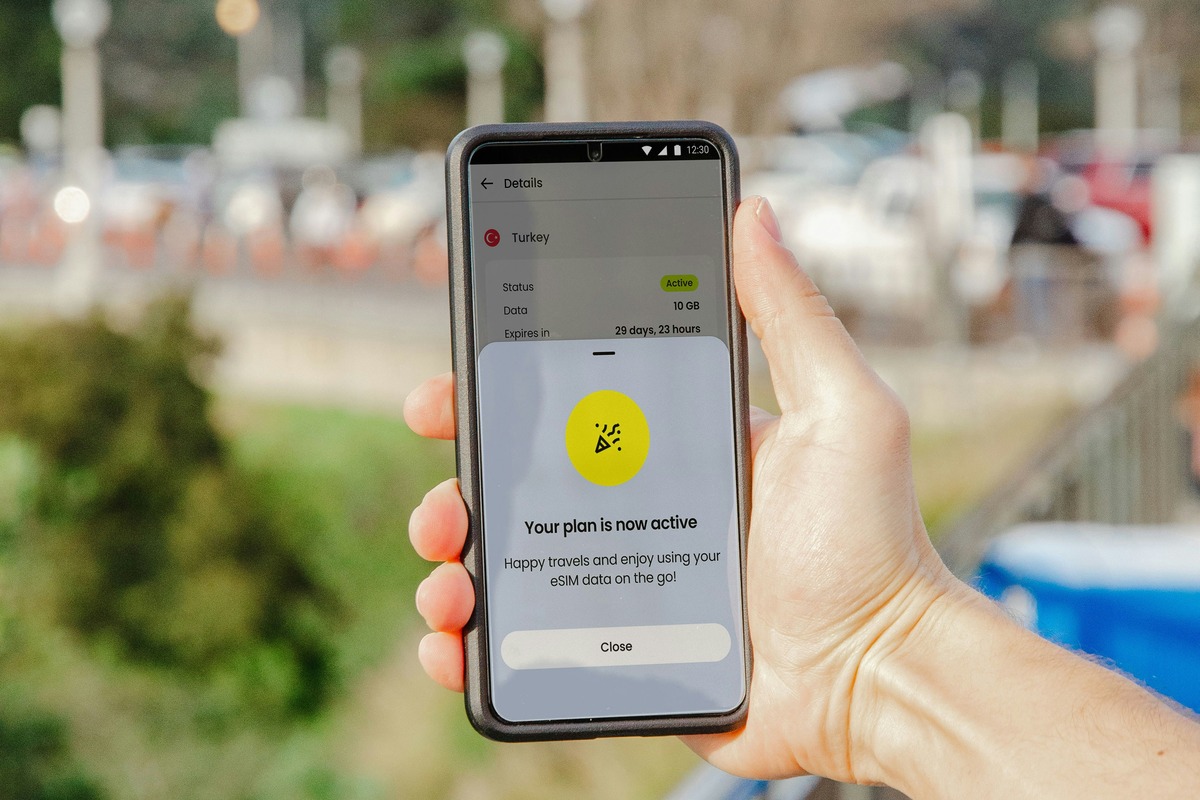
The best eSIMs and the best phone plans for an eSIM include Saily, for its diverse range of plans and intuitive support, or Airalo for international travel. But you'll find plenty of cheap eSIM options to consider depending on your needs — including the $0 TextNow eSIM for compatible devices.
An eSIM is a great way to enjoy flexible phone service that allows you to connect when traveling or switch between carriers easily. You can even find a number of free eSIM trials where you check out service before committing.
Not all eSIMs (and their respective plans) are created equal, though, so we rounded up the best eSIMs and plans for your particular needs, so you can more easily find the one that works for you.
Summary: Our Top Picks for Best eSIMs
| Category | Provider / Plan |
|---|---|
| Best eSIM Overall | Saily
|
| Best eSIM for International Travel | Airalo
|
| Best eSIM for Travel in Europe | Orange Travel
|
| Best eSIM for USA Travel | Nomad
|
| Cheapest eSIM | TextNow
|
| Best Free eSIM Trial | T-Mobile
|
| Best eSIM for Data-Only (Tablet) Plans | Tello
|
| Best Prepaid eSIM | US Mobile
|
ESIMs are heavily used by travel services that allow you to connect to a local network wherever you are in the world, also known as international eSIMs. Whether you’re travelling abroad, or are a visitor to the U.S., there are plenty of inexpensive options available. Our next three picks focus on general international/global travel, and travel to the U.S. or Europe specifically.
Methodology: How we picked the best eSIMs
ESIM technology is the same regardless of which carrier you get it from, offering a seamless digital activation that’s easily managed through your phone. What makes one eSIM different from another is the actual nontechnical management part, which we broke down into three elements to pick the best ones:
- Affordability. We know that for travel purposes, international roaming can get very expensive very quickly. We only looked for inexpensive eSIM options that would be more affordable than adding on a roaming package from your own provider.
- Reliability. We looked at real customer reviews and cross-checked the network partners each provider works with to determine the ones that won’t leave you hanging.
- Flexibility. We picked eSIMs covering a diverse range of data and phone plan options, so you can find the right service whatever your needs are.
Each of these factors is considered with its own weight, leading to a score that helps us determine the best picks.
Beginner's guide to eSIMs
What is an eSIM?
An eSIM is a digital version of a SIM card that's built into your device, eliminating the need for a physical SIM card. The “e” stands for “embedded” but an eSIM can also be called a virtual SIM card or a digital SIM card.
Once activated, an eSIM functions just like a traditional SIM card, allowing you to connect to cellular networks (even internationally), make calls, and use mobile data.
>> Read more: What is an eSIM?
How does an eSIM work?
An eSIM works just like a physical SIM card, allowing your device — be it a smartphone, tablet, smartwatch, etc. — to connect to a mobile network. The difference is that instead of inserting a physical card, an eSIM is digitally added to your phone (downloaded via a link or QR code) and can therefore be programmed remotely. You can store multiple eSIM profiles on a device and switch between them without having to swap out physical cards and contact your carrier to approve the swap.
Note, however, that your phone must be eSIM compatible. You can check your phone model on the manufacturer’s website specifically to confirm its compatibility.
Types of eSIMs
ESIMs all work the same, but there are distinctions between them with regard to the types of services you can get:
- Prepaid eSIMs. These eSIMs are made to provide you with a prepaid phone service, which requires a payment up front before you receive the service, eliminating the need for credit checks or potential to affect your credit score if you’re late on payment.
- Postpaid eSIMs. Alternatively, postpaid eSIMs provided by the “Big 3” (AT&T, Verizon, and T-Mobile) on their premium plans can only be activated alongside a postpaid plan, which bills you after the month of service. This also usually requires a contract for a set period (12-36 month terms), as well as a credit check.
- International eSIMs. These eSIMs are able to connect to local networks internationally for a more affordable data service while you’re abroad (and using these eSIMS is usually cheaper than paying data roaming fees or packages from your local service provider). Note that international eSIMs often are data-only, meaning you'll need to use a VoIP app or Wi-Fi calling to make calls.
- Local eSIMs. These cards have coverage specifically for one country (e.g. Spain) that will allow you to travel within that country comfortably but will require you to swap out your SIM card if you cross borders.
Which phones work with an eSIM?
While eSIM technology was introduced in 2016, it only recently has become widely adopted by manufacturers. You should check with your phone model’s manufacturer using its website to verify it lists eSIM support, but here is a general breakdown of popular models that do support eSIM:
What are the advantages of an eSIM?
There are many advantages to using an eSIM, including:
- Ease of set-up. No physical card means no rummaging around for something thin enough to use as tool to pop out the SIM card tray, then trying to follow (sometimes) complex instructions for activation.
- No waiting. With eSIMs delivery is instantaneous, so you can get your service up and running right away – no need to go to a store or wait around for a mail delivery.
- Flexible. You can switch between carriers and services seamlessly with eSIMs, without having to swap out physical cards and reset profiles. That's especially useful benefit for traveling.
- Eco-friendly. No physical card means less plastic waste.
What are the disadvantages of an eSIM?
- Limited carrier support: Not all carriers support eSIM activation yet. Check directly with whatever carrier you're considering for details of its eSIM compatibility. For example, the TextNow eSIM is available only for iOS at this time, although Android access is coming.
- Limited to newer devices: Since eSIM is still a relatively new technology, it's only supported by relatively newer devices.
- No physical backup: While eSIMs can make your life easier, they can also create problems when your phone no longer works. If you have issues with connecting to a network, or your phone truly is dead or damaged and you need to switch to a new one, it's no longer as easy as taking out the physical SIM and swapping it over. It also limits your options for troubleshooting if you start having issues with the SIM.
How to pick out the best eSIMs
The best eSIM is intuitive to activate, requires minimal to no customer support, and comes with a reasonably priced service plan. There are also some technical necessities to consider, so follow this easy guide before selecting your desired eSIM:
- Phone compatibility: Find out if your phone is eSIM compatible or requires a physical SIM card. Unfortunately, not all phones support eSIMs. Figure out if your phone can support one (confirmed on the manufacturer website), before you purchase one.
- Dual SIM compatibility: While it’s not necessary, it does make activating an international eSIM significantly easier if your phone has a dual SIM capacity. If it doesn’t, then you will need to temporarily disconnect your existing local SIM card to activate the international one while you’re travelling.
- Data needs: Before you start shopping around, you can calculate how much data you’ll need and narrow down your choices between a limited data plan, an unlimited data plan, or even a no data plan (talk & text only).
- Billing type: postpaid vs. prepaid: This decision may be largely based on your budget but can also be determined by your need for flexibility (being able to switch carriers easily), and whether or not you’d like to undergo a credit check.
- Pricing: Be realistic about what you can afford and make sure that you’re reading the fine print. Also, check whether any promotional prices you’re getting as a new customer are part of a “pre-pay up front for a multi-month bundle” or expire after a certain time (as pointed out in our Mint Mobile review).
- Coverage: Lastly, only look at eSIMs from providers that are on the network that works best in your area. (Or, if you want an eSIM for travel, check out the best international SIM cards.)
How to activate an eSIM
Once you pick the phone plan you want – with an eSIM – the carrier will send you instructions for activating the eSIM, which will either include a QR code or setup link to scan and activate on your device. (If you're getting a new number, check out steps you should take before changing your phone number.) Note that you'll need to be on Wi-Fi to activate the eSIM.
Step-by-step eSIM activation instructions:
- Request an eSIM from your carrier: Reach out to your carrier and ask for an eSIM. It will provide you with a QR code or setup link that lets you download the eSIM profile to your device.
Scan the provided QR code: Using the device where you want the eSIM activated, scan the code to activate.
a. iPhone: Open the camera app or a QR code scanner to begin the activation process.
b. Android: Go to Settings → Connections → SIM Card Manager, then tap Add mobile plan or Scan QR code.
- Follow the on-screen setup instructions: After scanning the QR code, or installing from the link provided, your mobile device will prompt you to confirm or enter additional details. Once you complete all the steps, your eSIM will be ready to use.
Frequently asked questions about eSIMs
Have questions or comments? Send us a note at [email protected]!